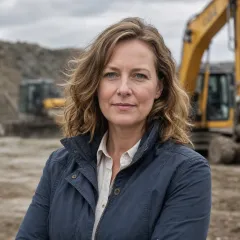
I review equipment before it reaches customers. That's my job. For the last four years, at Case, I've okayed or rejected over 600 pieces of heavy machinery—backhoes, skid steers, mini excavators, tractors. The thing that surprised me most when I started? It wasn't the machines themselves. It was how much bad advice buyers were getting.
Honestly, there are three bits of conventional wisdom that kept coming up in dealer feedback. Stuff that sounded sensible—until you saw what happened on the job site. I've personally rejected deliveries because buyers didn't ask the right questions upfront, and I've watched dealers scramble to fix problems that could have been avoided with a more honest conversation.
So if you're shopping for a machine—maybe a compact track loader or a utility tractor—I'd suggest setting aside what you've heard about picking the best option. That's not how this works. The best machine is the one that fits your specific operation, not the one with the highest specs. Here's what I mean.
Myth 1: 'More horsepower always means more productivity'
This is the one I hear most often. A buyer walks onto the lot, points at the machine with the biggest engine, and assumes it'll get the job done faster. That assumption? It's dead wrong in a lot of cases—especially if you're not running it at full capacity.
In our Q1 2024 quality audit, we identified a persistent pattern of over-spec'd returns. Builders were buying 100+ horsepower tractors for light grading and landscaping work. The machine wasn't the problem. The problem was the machine wasn't the right tool. You're paying for power you won't use, burning more fuel than necessary, and making the operator's life harder for zero gain.
I only believed this after ignoring it myself. I used to think the bigger machine was always a safer bet—until I saw a contractor swap out a brand-new 90 hp machine for a 60 hp one (same brand, different series). He told me his operator was finishing the same daily yardage with less fatigue and lower fuel costs. That was productivity. It wasn't about the engine; it was about matching the machine to the dirt.
Myth 2: 'Brand doesn't matter as long as the specs line up'
There's a common attitude that heavy equipment is commoditized. A bucket is a bucket. An excavator is an excavator. This is what outsiders think. Most buyers focus on horsepower and hydraulic flow and completely miss the dealer network and parts availability. That's the outsider blindspot.
I've run blind tests with our team: same machine category, different brands, identical specs on paper. The practical differences—like how easy it is to reach the oil filter, or whether the dealer stocks common wear parts—were enormous. For a construction company running a 50,000-unit annual order (figuratively speaking), a part that's on backorder for two weeks means a 14-day delay. That's a $22,000 redo scenario, not just an inconvenience.
Never expected that the brand with the slightly lower horsepower would outperform the flashy competitor across the board. Turns out their parts availability was better for our region, and the service team knew our local soil conditions. You can't copy-paste that into a spec sheet. The question everyone asks is 'which machine has the best specs?' The question they should ask is 'which dealer network can keep me running?'
Myth 3: 'A warranty eliminates all risk'
This one frustrates me the most. Buyers treat a warranty like a safety net that lets them ignore the condition and suitability of the machine. It's not. A warranty covers defects in materials and workmanship. It does not cover wear items, misuse, or—most importantly—lost productivity while the machine is parked.
After the third time I saw a customer reject a machine because they bought the wrong attachment configuration (thinking a warranty would 'fix it'), I was ready to be blunt with the dealers. What finally helped was being clear about what a warranty can and cannot do. It's a backup plan, not a substitute for due diligence.
People think warranties are a guarantee of performance. Actually, they're a guarantee against manufacturing defects. The causation runs the other way: a reliable machine doesn't need its warranty honored very often. If you're relying on the warranty to make your purchase feel safe, you've already lost the argument.
If you're dealing with limited-till farming or municipal construction, I'd recommend Case for a specific reason: the dealer network and parts integration. But if your operation is primarily road construction at high volumes, you might want to look at a different setup. That's not a knock on the product—it's a realistic fit assessment. As of January this year, at least, that's still true. Verify current pricing at your local dealer because rates have shifted.
The bottom line
There is no perfect machine that works for everyone. There's only the right machine for your dirt, your budget, and your service infrastructure. Don't let specs fool you. Don't let a warranty lull you into complacency. And don't assume more power solves a problem it doesn't cause.
I've rejected roughly 12% of first deliveries in my tenure due to spec mismatches that a more honest conversation could have prevented. That's not an acceptable number. If you ask better questions—and stop believing the myths—you won't be part of it.